Another day, another article about my childhood memories of the original Final Fantasy. Click below to give it a read!


The brothers O’Donovan watch each other’s backs in The Wind That Shakes the Barley
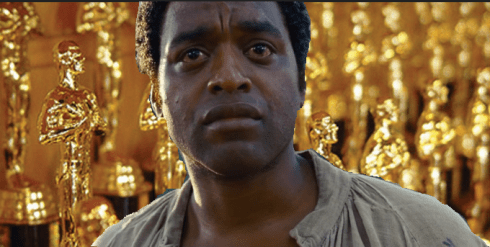
With the Oscars right around the corner, popular press will be awash with predictions and picks. This is critical crunch time, a period where every film buff gets assaulted with questions from people who’ll never see the nominated films. The expectation is to get it right, nail the answer. Fail and you lose your movie lovers card. My solution? Avoid picks altogether. Reduce the film industry’s biggest night to the accolades often found in the back of high school yearbooks. So break out that old letter jacket, pop on some Soundgarden and sit back in that bean bag chair as we break out the 2013 Oscar Superlatives on http://www.pantheonmag.com!


A combination of the real and surreal await those willing to jump into the wonderful The Act of Killing. (image: venturebeat.com)
What happens when evil becomes accepted? When it’s not only allowed, it’s praised. Celebrated. Spoken of with pride? History is full of crimes against humanity but when an entire country is involved, we all ask, “How did they let that happen”? It’s difficult to imagine the whole of Germany allowing Nazism or the Russian gulags operating for half a century. In the documentary The Act of Killing, director Joshua Oppenheimer examines the phenomenon of accepted atrocities without the need for historical references or archival footage. He goes straight to the people responsible.
The Act of Killing takes place 40 years after fall of the Thirtieth of September Movement, a 1965 coup d’etat of Indonesia. Repelled in just a few days, the incident caused a McCarthy style witch hunt with communists being the prime targets. Over the next two years, over 100,000 enemies of the state were slaughtered at the hands of privately hired death squads. Many of the gangsters involved in the slayings are now boastful paramilitary leaders and well known citizens. They not only admit to the crimes but smile about it, confident in what they did was best for the nation.
Oppenheimer, sensing something in their pride and swagger, gives them the tools to make a movie about their experiences forty years ago. He allows them to tell it their way without any filters. The Act of Killing documents the creation of their movie and serves as a complicated yet eye opening look into the acceptance of evil and the toll it takes on the human spirit.
The star of the show is Anwar Congo, one of the original death squad leaders and founding father of Pemuda Pancasilla, the country’s reigning paramilitary organization. On the outside, Anwar is jovial and light-hearted, even as he talks about his many methods of dispatching political enemies. His happy-go-lucky charm and pride for personally killing over a thousand people undercuts a lingering despair. This central morality question, one of duty of government versus crimes against the spirit, is at the core of the film.

Anwar (middle) and his pals are on top of the world as they cruise down an Indonesian street in The Act of Killing. (image: pastemagazine.com)
Oppenheimer directs it all with control and balance, allowing the now geriatric gangsters to react and even ham it up for the camera. According to Anwar and his crew of now powerful political figures, they did nothing wrong. The communists were a plague that needed to exterminated and not only did they gladly do so, they were rewarded with fame and riches. Oppenheimer never gives an opinion or blinks cinematically, even when they talk of proper garroting technique with a smile on their face.
As the film progresses and they start to shoot their extermination methods, the documentary becomes more surreal. Scenes of feigned ransacking of homes bring real tears to the faces of the local “actors” and simulated moments of torture, gives rise to long suppressed emotions. Anwar’s arc in particular is one of the most fascinating self-realizations in recent history. The doc is also exceptionally well crafted, as Oppenheimer uses the actual film footage to provide the juxtaposition between the group’s perception of the 1965 events and the emotional reality.
When the credits start to roll, there a few big names that pop up. Werner Hertzog and Errol Morris are labeled as producers. The production companies all get a plug. Five editors get mentioned. But there’s one contributor who stands out, one name who makes everything on screen seem more real, more dangerous.
Anonymous.
As the credits scrolls downward, the word rolls by in a stream. Second camera, production manager and recording engineer. Assistant directors and gaffers. All people who’d rather be faceless than risk being involved in a volatile exposé on the country they call home. The Act of Killing is an important, heart-rending view into the world of systematic corruption. It may not answer the question of why the Indonesian killings happened over 40 years ago, but it sheds a harsh, bright light on the men responsible for carrying it out and in turn, tells a haunting story of the cost of wanton brutality. The best documentary of 2013.
Score: 9 out of 10


Marie (Berenice Bejo) confronts Ahmad (Ali Mosaffa) in the latest film from Iranian director Asghar Farhadi. (image: http://www.unifrance.com)
All things crumble. Given enough age and time, everything decays. Buildings fall, bridges collapse, streets crack apart. Without constant maintenance, even the Mona Lisa will flake away until it’s nothing but blank canvas. It takes work to keep things serviceable, at presentation condition. Relationships are no different and never has this been better illustrated than by the work of Oscar winning director Asghar Farhadi. Like his last feature, the exceptional A Seperation, Farahdi swings for the fences again with The Past, a somber and honest look into a disintegrating marriage.
The declining union under the microscope is between Ahmad (Ali Mosaffa) and Marie (Berenice Bejo). Ahmad returns to France after a four year separation to finalize his divorce with Marie, only find things have drastically changed. Marie is living with Samir (Tahar Rahim), a man with a comatose wife, his young son Fouad (Elyes Aguis) and his daughters Lucie and Lea. Originally planning on a couple of days in his old neighborhood, Ahmad finds himself wrapped up in the emotional tumult of an ever changing family dynamic.
Farhadi is an expert at crafting dialogue and directing actors with The Past being no exception. Bejo in particular is masterful as a woman stretched to the brink by new love and old memories. More than deserving of her Best Actress award at last year’s Cannes Film Festival, Bejo is the story’s emotional hinge. The rest of the cast is equally impressive, each with human cracks and complicated fissures. While The Past doesn’t have the explosiveness of Farhadi’s previous work and has a flat tone, the fine acting more than makes up for any lulls in intrigue.

The cast of The Past takes a bow at Cannes. (image: http://www.zimbio.com)
Behind the camera, Farhadi makes genius decisions in his framing of the unfolding drama. Carefully paced and full of long shots through windows, doorways and hallways, the audience jumps between casual observer and active participant. It’s a subtle yet interesting technique, important in a story full of twists and turns. Also serving as the screenwriter, Farhadi again ensures no dialogue is wasted. Every word either moves the plot along or provides character insight.
Asghar Farhadi has his finger squarely on the pulse of human relationships. The more things twist apart, the more they string together in unexpected ways. His work is constantly evocative and with The Past, he cements his reputation as the most interesting Middle Eastern director working today. When I finished the screening, I labeled the film as wonderful yet depressing, a credit to his storytelling prowess. After giving it more thought, there’s a deeper reality. Farhadi’s latest work is startlingly truthful and it’s his near perfect insight into the human condition which strikes deep. It’s a downer because it’s painfully honest. The Past isn’t just a voyeuristic view into a troubled family. It’s a reminder of how much work is required to maintain the connections which matter most.
Score: 9 out of 10
 thesurrealityproject